

The digital textile printing market is undergoing continuous transformation. Production capacity, equipment stability, and finished print quality directly determine the competitiveness of textile printing businesses. Against this industry backdrop, industrial DTF printers have become a preferred solution for garment printing factories and textile processing companies looking to expand production capacity while ensuring accurate color reproduction. For businesses seeking to reliably handle orders and build a competitive advantage in the textile printing industry, understanding DTF equipment and its technical advantages is no longer simply an added benefit—it has become a strategic necessity for business growth.
Equipment selection directly affects print durability, the range of materials that can be processed, and the return on investment (ROI) of a project. This guide will provide a comprehensive overview of industrial DTF printers, covering DTF technology, the production process, key industrial equipment specifications, and equipment selection, helping you choose a solution that better matches your business needs.
PO-TRY has been developing digital printing equipment since 2011. Our machines are designed around the real production challenges faced by factories, with every detail carefully engineered to help you make a precise and profitable investment.
DTF, or Direct-to-Film printing, is an advanced digital textile printing technology. The process involves printing designs directly onto specialized PET film, applying polyamide or TPU hot-melt powder, curing the film, and then transferring the design onto the final fabric using a heat press.
DTF prints offer vivid colors, excellent elasticity, a soft hand feel, and outstanding wash resistance.
|
Technology |
Suitable Fabrics |
Dark-Colored Fabrics |
Pretreatment |
|
DTF |
Various fabrics |
✓ |
✕ |
|
DTG |
Best for 100% cotton |
Requires pretreatment |
✓ |
|
Sublimation |
Light-colored polyester |
✕ |
✕ |
1. Print the design onto PET film
The printer outputs CMYK color designs onto PET film and adds a white ink underlayer to provide a base for printing on dark-colored fabrics.
2. Apply hot-melt powder
While the ink is still wet, the film passes through the PO-TRY powder shaker. The hot-melt powder adheres only to the inked areas, reducing material waste.
3. Cure the film
The PO-TRY powder shaker integrates an oven function that melts the hot-melt powder and forms a gel-like adhesive layer.
4. Transfer the design onto the product
Once curing is complete, the printed film is placed onto the textile. A heat press applies high temperature and pressure to transfer the design onto the fabric.
5. Peel the film
After heat pressing, the film can be peeled either hot or cold, leaving the design permanently bonded to the fabric surface.
Suitable for T-shirts, hoodies, denim, bags, caps, leather, blended fabrics, and more.
White ink provides a base layer, supporting vibrant printing on both dark and light-colored fabrics.
Prints can withstand repeated washing while maintaining fabric elasticity.
No complex chemical pretreatment is required, reducing labor requirements and production time.
Ideal for e-commerce, personalized customization, print-on-demand, and one-piece fulfillment businesses.
Helps reduce the risks of white ink sedimentation, printhead clogging, and downtime for maintenance.
No screen-making is required, allowing businesses to flexibly handle both small-batch sampling and large-scale production. 
As order volumes increase, businesses' requirements for DTF equipment gradually shift from simply being able to "print" to achieving continuous and stable production.
Therefore, an important question when selecting equipment is:
Entry-level equipment is generally more suitable for startups, small-batch orders, and applications with relatively low production requirements.
Industrial DTF printers, on the other hand, are primarily designed for continuous mass production and high-frequency orders:
For businesses requiring continuous mass production and large-volume orders, PO-TRY industrial models focus on high production capacity and stable output while reducing the production cost per piece. The equipment integrates printing, powder application, and curing into a fully automatic continuous production line, reducing manual intervention.
When evaluating industrial equipment, the following specifications are essential for calculating return on investment (ROI):
Epson I3200-A1 printheads, multi-printhead configurations, and a maximum printing speed of 65 m²/h.
Available in 60 cm and 120 cm configurations to meet different production requirements.
Large-capacity continuous ink supply combined with a white ink circulation system supports long periods of continuous production.
An integrated powder shaker and extended intelligent temperature-controlled oven improve curing stability.
THK linear guide rails and NSK bearings ensure precise movement during long-term operation.
Multiple RIP software options are available. The proprietary RIP system supports intelligent layout and spot-color channel generation.
For industrial DTF equipment, production efficiency is not determined by a single specification. Instead, it depends on the overall coordination of systems including printing, ink supply, powder application, curing, mechanical transmission, and software.
There is no universally "best" DTF printer. The best solution is the one that most closely matches your business needs. Before purchasing, focus on the following factors:
Evaluate your current order volume and expected future growth.
Clearly define your product requirements, including fabric types, print sizes, and other application needs.
Do not evaluate equipment based solely on its purchase price. Calculate the costs of film, hot-melt powder, ink, electricity, and regular maintenance.
Check whether the ink has certifications such as OEKO-TEX® to meet safety standards for apparel and international markets.
Even the best equipment requires professional after-sales support. Confirm the availability of operator training, spare parts, and local technical support. 
PO-TRY was founded in 2011 and specializes in the R&D and manufacturing of digital printing equipment. Our R&D team focuses on solving the everyday production challenges faced by textile printing factories.
Since 2011, PO-TRY has been developing and manufacturing digital printing equipment while continuously focusing on the real production requirements of textile printing factories.
Imported core components combined with strict factory quality control.
Industrial DTF equipment + ink + PET film + hot-melt powder.
PO-TRY inks are OEKO-TEX® certified.
We provide equipment solutions based on each customer's business model, production capacity, and application requirements.
In-house R&D and manufacturing capabilities strengthen product development, production, and quality control.
Operator training, installation guidance, preventive maintenance, and more.
We provide local technical support in USA and 24/7 online after-sales service.
Wondering which PO-TRY DTF model can boost your production capacity? Contact us for a one-on-one consultation and tailored solution.
 16,000 meters per day! PO-TRY 36-head dye sublimation r "Speed King" makes its global debut at ITMA Shanghai
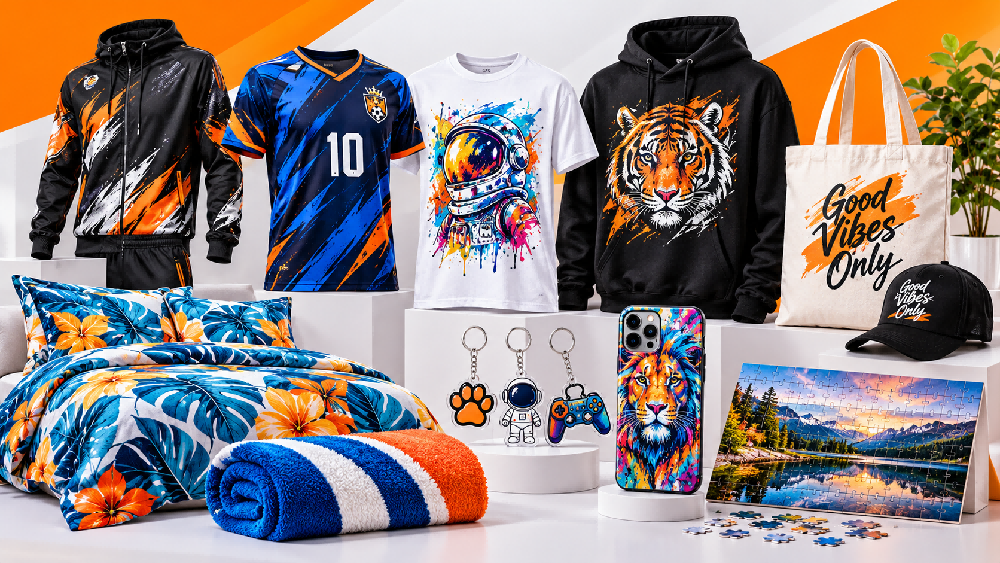 POD(Print On Demand) Complete Solution
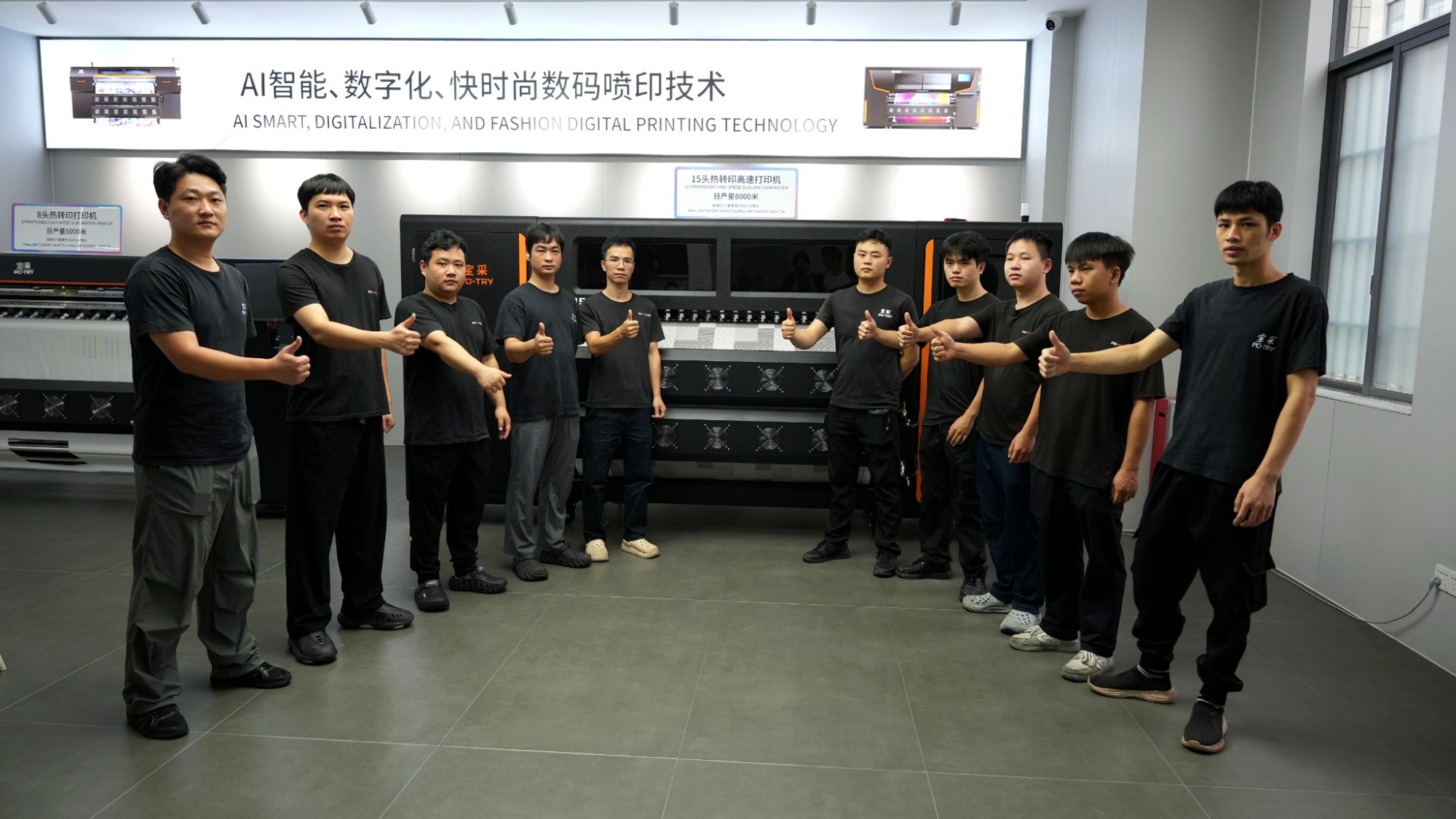 PO-TRY After-Sales Service Overview- DTF, Sublimation printer
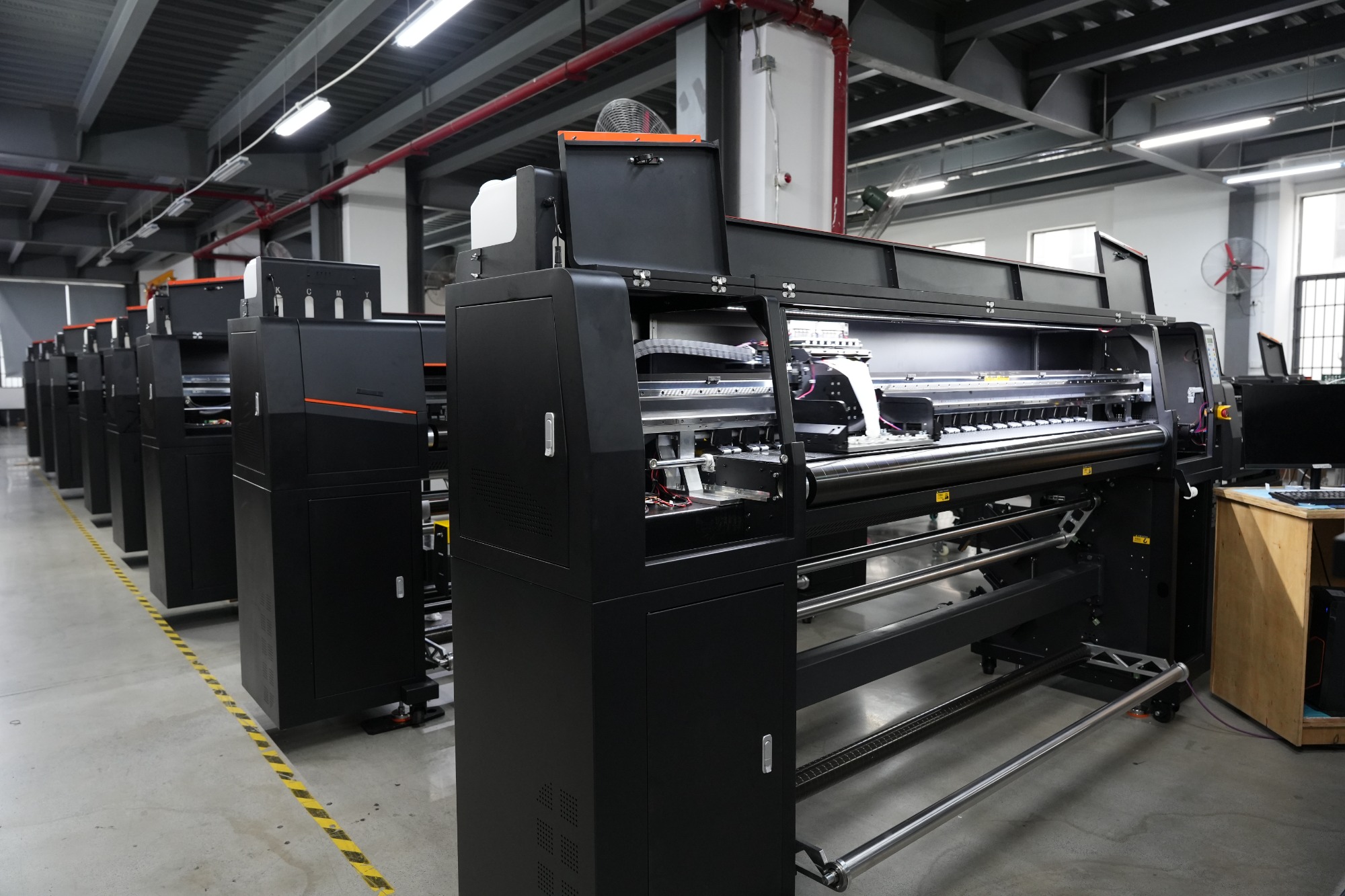 Industrial Textile Sublimation Printer: Buying and Maintenance Guide
